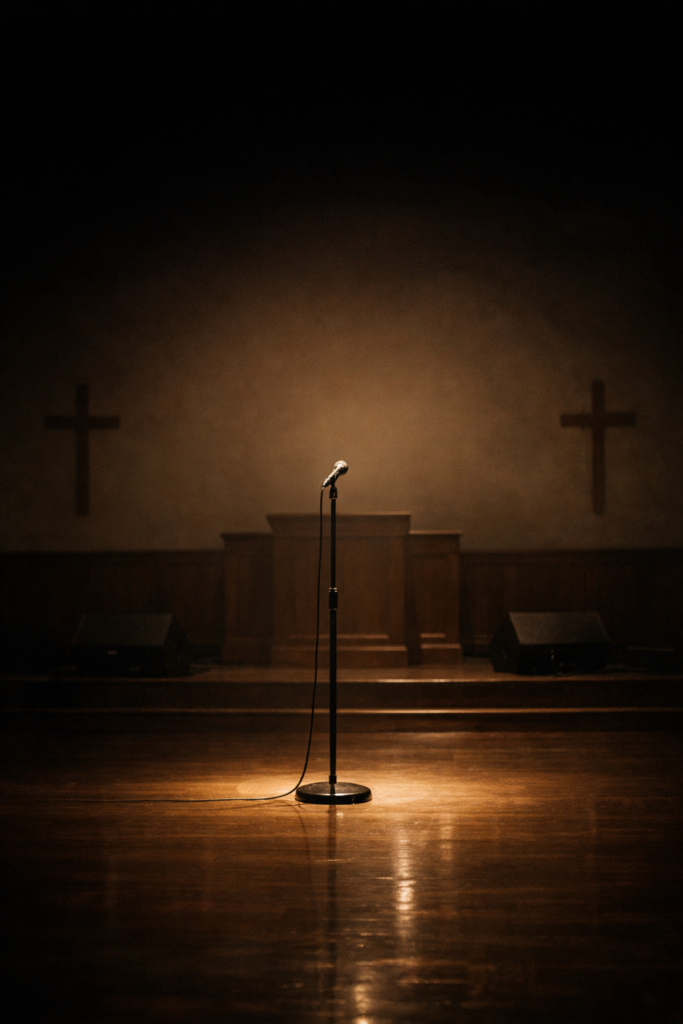
“When fear no longer edits the truth, freedom finally finds its voice.”
For years, I had what someone once described as an “interesting relationship with truth.”
Not because I loved deception. Not because I wanted to manipulate people.
But because I was deeply afraid of rejection.
I’ve shared before that childhood trauma distorted many of the things I believed and shaped how I learned to respond. Some of the people who harmed me used kind words to cover deeply inappropriate actions.
“Don’t tell anyone.” “I was only helping you.” “It’s not a big deal.”
Those words taught my young heart that silence could feel safer than honesty. They taught me that truth had consequences and that sometimes the person telling the truth became the problem.
Alongside family turmoil, instability, and the quiet belief that my voice might never truly matter, I developed a deep need for approval.
And right beside it grew a complicated relationship with truth.
As a child, I struggled with speech and processing. When I tried to explain myself, the words did not always come out clearly. I would hesitate, become emotional, or struggle to organize what I was trying to say.
And culturally, that combination: hesitation, emotion, and searching for words, was often interpreted as dishonesty.
So I adjusted.
Instead of risking getting stuck while telling the truth, I learned to present things more carefully, more smoothly, and sometimes, more beautifully than they needed to be.
My goal was not always to deceive. My goal was to be believed, to be understood, and to be accepted.
But survival patterns do not age well.
What begins as a child’s attempt to feel safe can become an adult pattern that damages trust. Over time, this way of relating to truth became exhausting. As people got closer to me, they began noticing the gaps between my words and reality.
Early in my marriage, it became painfully clear that fear of rejection, when left unchecked, could hurt the very people who loved me most.I kept asking myself:
Why embellish with people who love me?
Why soften the truth with those who want what is best for me?
Why make something sound better when the truth is already enough?
The answer was fear.
The fear of being misunderstood. The fear of not being believed. The fear that the unedited version of me would not be accepted.
Understanding the root did not excuse the behavior or erase the hurt it caused. But it helped me see what needed healing in me.
Then God met me there.
Scripture did more than confront my words. It exposed the divided condition beneath them.
“Being double-minded and unstable in all his ways.” James 1:8, CSB
In context, James is describing someone who asks God for wisdom while wavering in faith. He is not specifically teaching about dishonesty, but the picture of being double-minded still confronted me.
I was trying to live in two places at once.
I wanted to be truthful, but I also wanted to control how the truth would be received.
I wanted freedom, but I was still protecting the habits that made me feel safe.
I wanted to trust God, but I was allowing fear to edit my words.
The deeper issue was not merely in my speech. It was in my heart.
That is why Paul’s instruction is so direct:
“Therefore, putting away lying, speak the truth, each one to his neighbor, because we are members of one another.” Ephesians 4:25, CSB
Truth is part of how we love one another. When truth is distorted, relationships suffer. But when we speak truthfully, we create room for trust, healing, and genuine connection.
As I began confronting the fears behind my behavior, I realized something even harder:
I was not only doing this with people. I was doing it before God. Before the One who already knew everything.
I was polishing prayers, softening confessions, and presenting edited versions of what He already saw clearly.
Yet God did not respond with rejection.
He responded with an invitation:
“Draw near to God, and he will draw near to you. Cleanse your hands, sinners, and purify your hearts, you double-minded.” James 4:8, CSB
That verse held both the problem and the solution.
God was not asking me to perfect my speech or perform honesty better. He was inviting me to come closer, to let Him purify my heart, and to allow my inner life and outward words to come back into alignment.
Before God, I did not need to prove that I was articulate, composed, or believable enough.
He already knew the frightened girl. He knew the woman she became. He knew the good, the bad, the broken, and the parts I was still learning to name.
And He was not asking for a polished version. He wanted the truth brought into the light.
Not because He needed the information, but because I needed the freedom.
Honesty is not simply admitting facts. It is trusting that I no longer have to control the story to remain loved.
The root of my struggle may have been fear, but fear could no longer govern my words. Healing required repentance, accountability, and the willingness to tell the truth even when my voice shook.
And when I began doing that, freedom followed.
Today, I can say this with peace: I have nothing to hide.
That does not mean I communicate perfectly. It means I no longer want fear to be the editor of my life. A healthy relationship with truth has become one of the most freeing gifts God has given me.
So I will ask you the same question I had to ask myself:
Is your truth tuned?
Not only your words, but your heart.
Are you telling the truth while trying to control how it is received?
Are you editing yourself because you are afraid the unpolished version will not be loved?
Are old survival patterns shaping the way you communicate with the people closest to you?
God is not afraid of the truth. He already knows it.
And when we bring our whole, unedited hearts into His light, truth no longer becomes something we have to fear.
It becomes the road that leads us into freedom.
Let’s Tune In.